Category: Visas and Residency

  • NIF for the D7 visa: why your application starts with a tax number

    NIF for the D7 visa: why your application starts with a tax number


    Back to all guides

    Visas and Residency

    NIF for the D7 visa: why your application starts with a tax number

    26 October 2026By Mariana Santos

    Most D7 applications do not really begin at the consulate. They begin weeks or months earlier, at a desk at home, with a nine digit Portuguese tax number. The D7, Portugal’s passive income visa, is applied for in your country of residence, and the file the consulate expects typically rests on Portuguese foundations: a bank account opened and funded in Portugal, and accommodation arranged there. All of it asks for a NIF. This guide explains where the tax number fits in a D7 application, the order the steps usually run in, and the points that catch applicants out. It covers the NIF side only.

    A retired couple strolling with coffee cups down a decorated old town lane in Lisbon, Portugal, the retirement move a D7 visa makes possible
    A retired couple in a Lisbon old town lane. For many D7 applicants, this is the life the paperwork is for. Photo via the Portuguese Embassy in Nicosia.

    The short answer

    Your D7 application starts with a NIF. The D7 file typically includes a Portuguese bank account opened and funded, accommodation evidence in Portugal, and forms and contracts that all ask for a Portuguese tax number, so applicants get the number first, from home, often months before they travel. The consulate does not issue it: the NIF comes from Finanças, the Portuguese tax authority, and non-EU/EEA applicants apply through a fiscal representative in Portugal. Get the number early and the rest of the file has something solid to stand on.

    • The NIF comes before the bank account, the lease and the appointment, not after them.
    • You apply for it from home, while you are still a non-resident, through a fiscal representative if you live outside the EU and EEA.
    • The same NIF follows you through the visa, the residence permit and your life in Portugal. It is issued once and never changes.

    What the D7 visa is, in general terms

    The D7 is Portugal’s residence visa for people who live on passive income: retirees drawing pensions, and people whose income comes from savings, rents, dividends or similar sources rather than from a Portuguese job. It is the route many people mean when they talk about retiring to Portugal. You apply at the Portuguese consulate, or the visa centre that serves applicants, in the country where you live, and if the visa is granted you travel to Portugal and complete the residence permit stage with AIMA, Portugal’s agency for integration, migration and asylum.

    That is the shape of it, and this guide deliberately stays at that level. Visa categories, document lists, fees and processing are set by the authorities and change over time, and the consulate that handles your file is the source that matters for your case. What does not change is the practical order of the paperwork, and that order starts with a tax number.

    Why the NIF comes before the visa appointment

    Look at what a D7 file usually has to show, and the position of the NIF explains itself. The file typically includes a Portuguese bank account in your name, opened and funded. A Portuguese bank records your NIF when it opens the account: without the number, this step cannot properly start. Our guide to whether you need a NIF first or a bank account first walks through that order in detail, and D7 applicants meet it earlier than almost anyone.

    The same is true of accommodation. The file typically includes evidence of somewhere to live in Portugal, often a rental contract, and a Portuguese lease is drawn up with the tenant’s NIF on it. Landlords and lawyers ask for the number as a matter of routine. Add the forms and declarations that run through the file, each with a space for the tax number, and the pattern is clear: the NIF is not one item on the D7 list. It is the key that unlocks several of the others.

    So experienced applicants work backwards: they get the NIF first, while there is no deadline pressure, and build the bank account, the lease and the evidence on top of it.

    Hands holding a passport beside a visa application form and a laptop on a desk, the documents a D7 visa file is built from
    Building the file at home: passport, application form and laptop. The Portuguese parts of the file all start with a NIF. Photo via szikinger.ca.

    The D7 sequence, in the order it usually runs

    Every consulate publishes its own list, and the details vary. In general terms, though, a D7 application usually moves through the same six stages, and the NIF sits at the front of the queue:

    The D7 sequence in its usual order, in general terms. Consulates vary, so check the current list for yours.

    Notice what the sequence means in practice: stages two and three cannot properly begin until stage one is done. An applicant who leaves the NIF to the week before the appointment can find the bank account, the funding evidence and the lease all waiting on a single number. The number itself is quick to arrange from home. It is the queue behind it that takes the time.

    You apply as a non-resident, so the representative route applies

    When you apply for a D7, you are living outside Portugal, which makes you a non-resident in Finanças terms at the moment you need the number. Applicants living in the EU and EEA can register with a European address. Applicants living elsewhere generally need a fiscal representative in Portugal to apply and to receive tax post on their behalf, which is the standard route our guide to getting a NIF from outside Portugal describes step by step, and our guide to getting a NIF without a fiscal representative explains who needs one and who does not.

    The representative is not a visa formality that ends at the airport. They stay on your Finanças record, receiving your tax post, until you are living in Portugal and registered at a Portuguese address, when the arrangement can be reviewed, as our guide to needing a fiscal representative after you move explains. For a D7 move, think of the representative as a bridge, holding your Portuguese tax post until your own address in Portugal takes over.

    Couples and families: two names, two numbers

    D7 moves are very often made by couples, and the NIF rule for couples is simple: each adult needs their own number. The joint bank account the file rests on is opened in both names, and the bank records a NIF for each holder. A lease names both partners, each with their number, and the consulate file identifies each applicant by their own tax number. There is no such thing as a shared or household NIF.

    The practical answer is to apply together, in one family application, so both numbers arrive on the same timetable and the bank and lease steps are never waiting on one missing half. Our guide to getting a NIF for your children and family covers the family side, including children, and when a family applies together through this service, the family discount applies to the NIF fees.

    Income evidence, and the threshold this guide will not quote

    The D7 turns on passive income, so income evidence sits at the heart of the file: pension statements, savings records, rental income, dividends, presented in the form your consulate asks for. One thing this guide will not do is quote you the minimum income figure. That is deliberate. The D7 income threshold is tied to the Portuguese minimum wage, and the minimum wage changes, so any euro amount printed in a guide like this one quietly goes out of date, and an out of date threshold can mislead an application by a wide margin.

    For the current figure, go to the source: the Portuguese consulate or visa centre handling your application, and the official Portuguese government information published for visa applicants. Check it close to the date you apply, not from a blog post written in a different year. This article’s job is the tax number, and on that we can be exact.
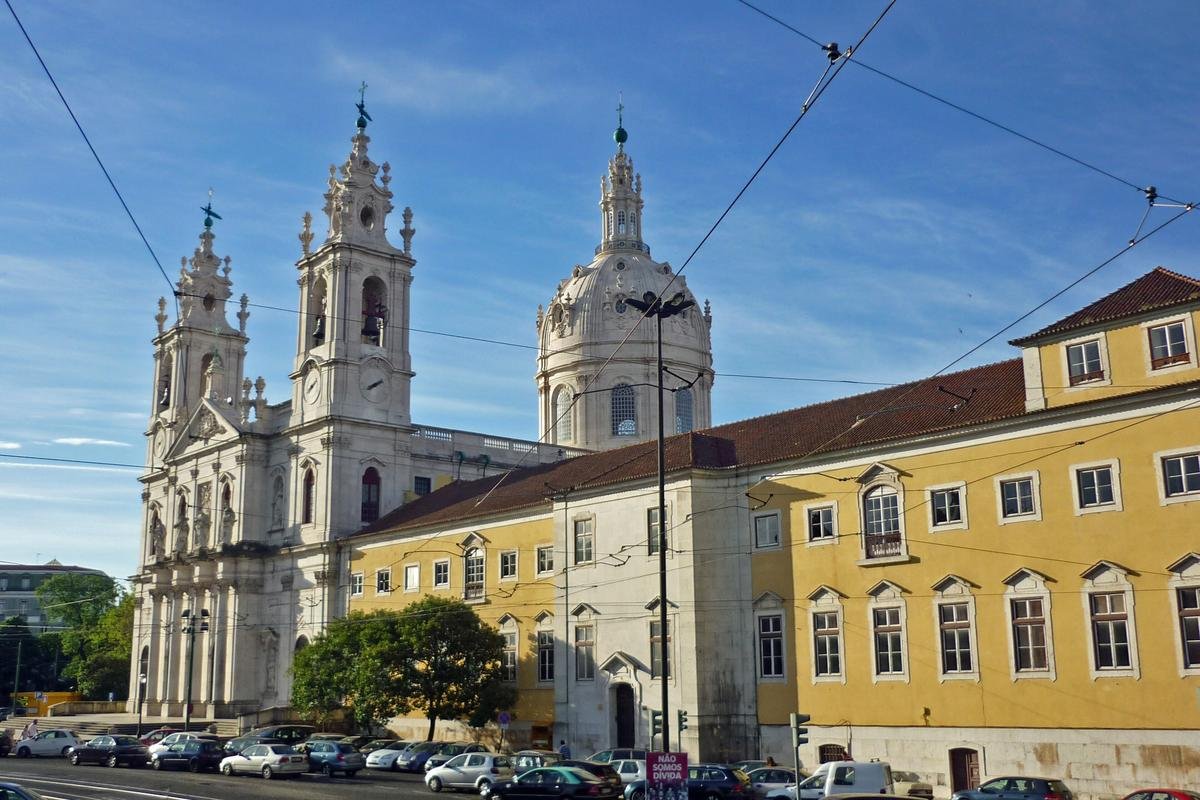
    The Basílica da Estrela and a yellow apartment building in the Estrela neighbourhood of Lisbon, Portugal, a residential area D7 movers settle in
    Estrela, one of the Lisbon neighbourhoods new residents settle in. The same NIF follows you from the visa file to your life here. Photo via Wikimedia Commons.

    After the visa: the same NIF, a new chapter

    A granted visa is not the end of the paperwork. You travel to Portugal and attend the residence permit stage with AIMA, and the permit file uses the same NIF you started with. Nothing is reissued and nothing starts again: the number from your first bank account is the number on your residence paperwork, your lease, your utilities and your tax record. This is why getting it right at the start, the exact name as it appears in your passport, matters so much.

    Two updates usually follow the move. You register your Portuguese address, and your Finanças record is updated to match, which our guide to updating the address on your NIF covers step by step. And your tax position needs its own thinking: holding a residence permit and being tax resident in Portugal are related but different questions, and our guide to NIF and tax residency and the 183-day rule explains where the line sits. A visa lets you live in Portugal. It does not, by itself, settle your tax status.

    Common confusions

    • The consulate will give me a NIF. It will not. Consulates handle visas; NIFs are issued by Finanças, the tax authority, and the NIF has to exist before parts of the visa file can be built.
    • The NIF is part of the visa fee or the visa process. It is a separate application, made separately, usually before the visa appointment is even booked. Nothing you pay for the visa includes it.
    • I will sort the NIF in the last week. It is only a number. It is only a number, and the bank account, the funding and the lease are all queued behind it. The last week is when applicants discover that a quick number can still hold up a slow file. Get it first, while nothing is urgent.

    This guide is general information about where the NIF fits in a D7 application. It is not immigration or tax advice. Visa rules, document lists and income thresholds change, and they are applied by the consulate that handles your case: check the current official requirements for your consulate before you apply, and take advice from a Portuguese immigration lawyer for the visa itself.

    Frequently asked questions

    In practice, yes, and you need it early. The D7 file typically includes a Portuguese bank account opened and funded and accommodation evidence such as a rental contract, and both are arranged against your Portuguese tax number. The consulate does not issue the NIF: it comes from Finanças, so applicants arrange it from home before the appointment.

    Finanças, the Portuguese tax authority, issues every NIF. The consulate handles the visa itself and never issues tax numbers. If you live outside the EU and EEA, the NIF application is made through a fiscal representative in Portugal while you are still living abroad.

    At the start, before the bank account and the lease. Many applicants arrange the number months before they travel, because the account opening, the funding and the accommodation evidence all depend on it. Leaving it to the final week is the most common avoidable cause of a rushed D7 file.

    Yes. Every adult needs their own Portuguese tax number. A joint bank account records a NIF for each holder, a lease names each tenant with their number, and the consulate file identifies each applicant individually. Couples usually apply together in one family application, so both numbers arrive on the same timetable.

    This guide does not quote a figure, on purpose. The D7 income threshold is tied to the Portuguese minimum wage, and the minimum wage changes, so a printed amount goes out of date. Ask the consulate or visa centre handling your application, or check the current official Portuguese government information, close to the date you apply.

    Not by itself. A residence visa and tax residency are separate questions: tax residency turns on tests such as the number of days you spend in Portugal and where your habitual home is. Holding a NIF does not settle it either. Our guide to NIF and tax residency explains the separation in general terms.

    Start your D7 file with the number everything asks for

    Apply in 5 minutes from your sofa, see your full price before you submit, and let us deal with Finanças for you. A NIF through this service costs €99 Standard or €145 Urgent per person, with fiscal representation included for the first 6 months and renewal afterwards at €99 per year, cancel anytime. Your official NIF arrives by email, ready for the bank, the lease and the consulate file.

    Start my application

  • NIF for the digital nomad visa (D8): the remote worker’s first step

    NIF for the digital nomad visa (D8): the remote worker’s first step


    Back to all guides

    Visas and Residency

    NIF for the digital nomad visa (D8): the remote worker’s first step

    26 October 2026By Mariana Santos

    Remote work has a paperwork order, and Portugal’s digital nomad visa is no exception. Long before you choose a neighbourhood or a coworking desk, the D8 file asks for Portuguese foundations: a bank account in Portugal, evidence of somewhere to live, and forms that carry a Portuguese tax number. That number, the NIF, is where the application really starts. This guide explains where the NIF fits in a D8 application, the order the steps usually run in, and how the D8 differs from its better known cousin, the D7. It covers the tax number side only, in general terms.

    A remote worker typing on a laptop at a terrace table overlooking the Alfama rooftops, São Jorge Castle and the Tagus river in Lisbon, Portugal, at sunset
    A remote worker on a Lisbon terrace at sunset, São Jorge Castle and the Tagus behind her. For D8 applicants, this is the working life the paperwork is for. Photo via Vodafone.

    The short answer

    For a D8 application, the NIF comes first. The file typically involves a Portuguese bank account, accommodation evidence in Portugal and Portuguese paperwork, and all of it is arranged against your Portuguese tax number, so remote workers get the number from home, before the consulate appointment. The consulate does not issue it: the NIF comes from Finanças, the Portuguese tax authority, and applicants living outside the EU and EEA apply through a fiscal representative in Portugal. Sort the number early and the rest of the file can be built on it.

    • Bank account, accommodation evidence and appointment all sit behind the number, so it goes first.
    • You apply from your home country as a non-resident, using a fiscal representative if you live outside the EU and EEA.
    • One number covers the visa file, the residence permit and your working life in Portugal. It never changes.

    What the D8 visa is, in general terms

    The D8 is Portugal’s residence visa for remote workers: people employed by a company outside Portugal, or freelancing and contracting for clients outside Portugal, who want to live in Portugal while keeping that foreign work. You apply at the Portuguese consulate, or the visa centre serving applicants, in the country where you live. If the visa is granted, you travel to Portugal and complete the residence permit stage with AIMA, Portugal’s agency for integration, migration and asylum.

    That short description is as far as this guide goes on the visa itself, deliberately. The detailed rules, document lists and fees belong to the authorities, they change, and the consulate handling your case applies them. What stays constant is the practical sequence underneath, and that sequence begins with a tax number.

    D8 or D7: two different income stories

    Readers often meet the D8 and the D7 in the same search results, and the two are easy to confuse. The honest dividing line is the kind of income. The D7 is built for passive income: pensions, rents, dividends and savings that arrive whether or not you work. The D8 is built for active income from remote work: a salary from a foreign employer, or fees from foreign clients you serve online. Same country, same tax number at the start, different story about where the money comes from. If your income is passive, our guide to the NIF for the D7 visa covers that route in full.

    Why nomads sort the NIF before the appointment

    A D8 file is assembled from two countries at once: your work evidence comes from home, and your Portuguese evidence comes from Portugal. The Portuguese side is where the NIF does its work. The file typically involves a Portuguese bank account, and a Portuguese bank records your NIF when the account opens, so the account step waits on the number. Our guide to whether you need a NIF first or a bank account first explains that order, and remote workers meet it at the very start of their move.

    Accommodation evidence works the same way. The file typically shows somewhere to live in Portugal, which might begin as a long booking and become a rental contract, and a Portuguese lease is drawn up with the tenant’s NIF on it. Add the application forms and declarations, each with its space for the tax number, and the pattern is the same one every visa applicant meets: the NIF is not a box to tick at the end. It is the piece the other pieces attach to.

    So nomads who have done this before work in a particular order: number first, from home, while the timeline is still relaxed, then the account, the accommodation and the evidence on top of it. Our step by step guide to getting a Portuguese NIF from outside Portugal shows the remote application itself.

    A remote worker typing on a laptop in a café, a coffee cup on the wooden table beside them, while preparing a digital nomad visa file
    Working from a café while the file comes together. The Portuguese parts of a D8 file all start with a NIF. Photo via pinlions.com.

    The D8 sequence, in the order it usually runs

    Consulates publish their own lists and the details vary, so treat this as the general shape rather than a checklist for your case. In that shape, a D8 application usually moves through six stages:

    The D8 sequence in its usual order, in general terms. Consulates vary, so check the current list for yours.

    Read the sequence backwards and the timing lesson appears: stages two and three cannot properly start until stage one is finished. A nomad who leaves the NIF until the appointment is close can watch the account opening and the accommodation evidence queue up behind a single number. The number itself is quick to arrange from home. It is the queue behind it that takes the time.

    Income evidence, and the figure this guide will not quote

    Because the D8 is a remote work visa, income evidence sits at its centre: the employment contract or client contracts, and records showing the income they produce, presented as your consulate asks. One thing this guide will not give you is the minimum income amount. That is deliberate, and it protects your application. The D8 income requirement is tied to multiples of the Portuguese minimum wage, and the minimum wage changes, so a euro figure printed in a guide quietly goes out of date, and planning around a stale figure can sink an otherwise sound file.

    For the current requirement, go to the source: the consulate or visa centre handling your application, and the official Portuguese government information for visa applicants, checked close to when you apply. This guide can be exact about the tax number, and it stays exact by refusing to guess at the rest.

    You apply as a non-resident, so the representative route applies

    At the moment you need the NIF, you are living outside Portugal, which makes you a non-resident in Finanças terms. Applicants living in the EU and EEA can register with a European address. Applicants living elsewhere generally apply through a fiscal representative in Portugal, who files for the number and receives tax post on their behalf. Our guide to getting a NIF without a fiscal representative explains who needs one and who does not, and our guide to what a fiscal representative does explains the role itself.

    The representative does not vanish when the visa arrives. They stay on your Finanças record until you are living in Portugal and registered at your own Portuguese address, when the arrangement is reviewed, as our guide to needing a fiscal representative after you move explains. Think of representation as scaffolding: essential while the file is being built from abroad, and removable once your own address in Portugal is standing.

    Working life once you are resident

    Once the residence permit is in place, the NIF stops being visa paperwork and becomes your everyday working number. It sits on your Portuguese bank account, your lease, your utilities and your tax record. If you invoice for your work, freelancers in Portugal generally invoice through the recibos verdes system, the official green receipts route, and your NIF is the number on every receipt. How invoicing interacts with your own tax position is a separate topic with real consequences, so take proper tax advice for your situation rather than treating any guide as a manual.

    One more number usually follows later. Social security in Portugal runs on the NISS, a separate number that arrives through employment or registration once you are resident and working here, not through the visa file. Our guide to NIF vs NISS vs SNS number keeps the three numbers straight, so you know which one a form is asking for and why.

    Remote workers with laptops around a long shared table in a coworking space, the working routine many digital nomad visa residents settle into in Portugal
    Shared desks and laptops: the working week many new residents settle into. Your NIF is the number underneath all of it. Photo via Digital Nomads World.

    The visa is not your tax position

    A D8 visa gives you the right to live in Portugal while you work remotely. It does not, by itself, settle where you are tax resident. Visa status and tax residency are separate systems with separate tests, and spending most of the year in Portugal generally has tax consequences that your arrangements in your home country need to account for, which is why D8 movers usually plan the two tracks side by side. Holding a NIF does not make you tax resident either: the number is identification, nothing more. Our guide to NIF and tax residency and the 183-day rule explains the separation in general terms.

    Common confusions

    • I will land first and sort the NIF afterwards. You can get a NIF in Portugal, but the D8 file is built before you travel: the bank account and accommodation evidence behind it are arranged from home. Landing first usually means rebuilding the timeline under pressure.
    • The D8 is a way to live in Portugal on a tourist stay. It is not. The D8 is a residence visa applied for in your country of residence before you move. A tourist stay is a visit, with its own limits, and it is not a stage of the D8 process.
    • Getting a NIF makes me tax resident in Portugal. It does not. The NIF is an identification number that residents and non-residents alike hold. Tax residency turns on separate tests, such as the days you spend in Portugal and where your habitual home is.

    This guide is general information about where the NIF fits in a D8 application. It is not immigration or tax advice. Visa rules, document lists and income requirements change, and they are applied by the consulate that handles your case: check the current official requirements for your consulate before you apply, and take advice from a Portuguese immigration lawyer for the visa itself.

    Frequently asked questions

    In practice, yes, and you need it early. The D8 file typically involves a Portuguese bank account and accommodation evidence in Portugal, and both are arranged against your Portuguese tax number. The consulate does not issue the NIF: it comes from Finanças, so applicants arrange it from home before the appointment.

    The income. The D7 is Portugal’s passive income route, for pensions, rents, dividends and similar income. The D8 is for active remote work income: a salary from an employer outside Portugal, or fees from clients outside Portugal. Both applications start with the same Portuguese tax number.

    This guide does not quote a figure, on purpose. The D8 income requirement is tied to multiples of the Portuguese minimum wage, and the minimum wage changes, so a printed amount goes out of date. Ask the consulate or visa centre handling your application, or check the current official Portuguese government information, close to the date you apply.

    At the start, before the bank account and the accommodation evidence. The account opening and the lease or booking paperwork both run against the number, so applicants who arrange it first build the rest of the file without waiting. Leaving it late is the most common avoidable cause of a rushed D8 file.

    No. The D8 is a residence visa, applied for at the consulate or visa centre in your country of residence before you travel. A tourist stay is a visit with its own limits, not a route into the D8. Check the current official requirements for your consulate, because they decide how applications are made.

    Not automatically. Visa status and tax residency are decided by different tests: tax residency looks at how many days you spend in Portugal and where your habitual home is, and a NIF settles neither question. Our guide to NIF and tax residency explains the separation in general terms.

    Start your D8 file with the number everything asks for

    Apply in 5 minutes from your sofa, see your full price before you submit, and let us deal with Finanças for you. A NIF through this service costs €99 Standard or €145 Urgent per person, with fiscal representation included for the first 6 months and renewal afterwards at €99 per year, cancel anytime. Your official NIF arrives by email, ready for the bank account, the accommodation evidence and the consulate file.

    Start my application